
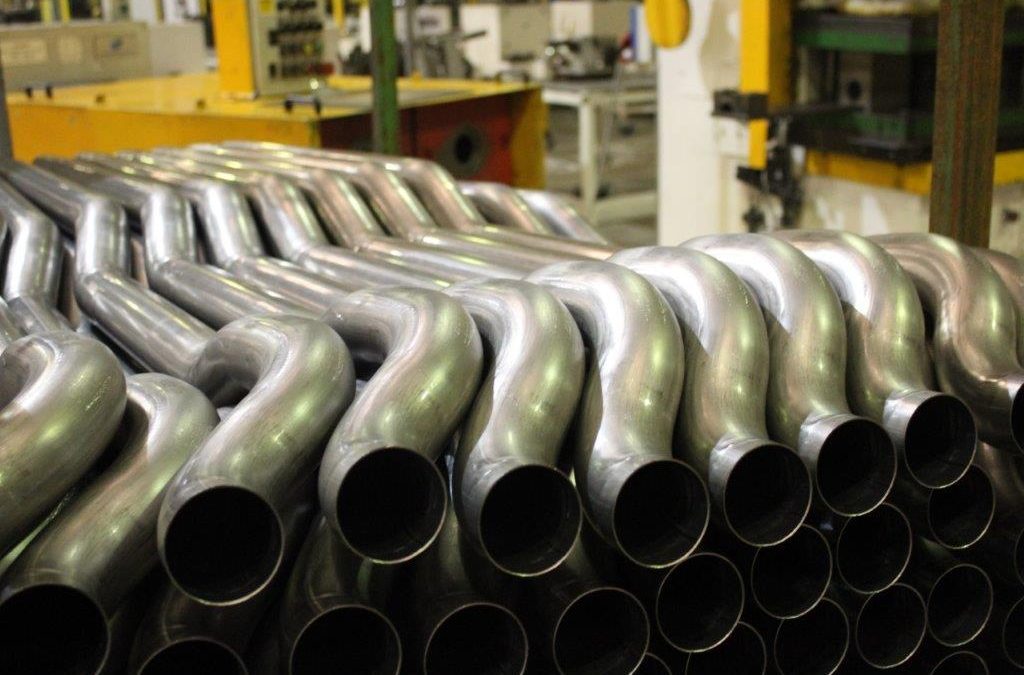
Stainless steel exhaust tubing is widely used across the automotive, transport and engineering industries because it combines strength, corrosion resistance and durability with the ability to withstand demanding operating conditions.
From passenger vehicles and performance cars to commercial vehicles and specialist engineering applications, choosing the right exhaust tubing can have an important impact on the reliability, longevity and performance of the finished exhaust system.
But what exactly is stainless steel exhaust tubing, why is stainless steel so well suited to exhaust applications, and what should manufacturers consider when selecting it?
In this guide, we answer some of the most common questions surrounding stainless steel exhaust tube and explain why it continues to be an important material for modern exhaust systems.
What Is Stainless Steel Exhaust Tubing?
Stainless steel exhaust tubing is tubular stainless steel specifically suited to the manufacture of exhaust systems and associated components. It provides good corrosion resistance, strength and durability while coping with heat, moisture, road contaminants and gases generated by an exhaust system.
Exhaust tubing forms the pathway through which exhaust gases travel from the engine towards the vehicle’s exhaust outlet.
Depending on the application, stainless steel tubing may be incorporated into components such as exhaust pipes, silencers, catalytic converter assemblies, tailpipes and other fabricated exhaust components.
Its combination of mechanical properties and corrosion resistance makes stainless steel particularly valuable where components need to deliver reliable performance over an extended service life.
Why Is Stainless Steel Used for Exhaust Systems?
Stainless steel is used for exhaust systems primarily because it offers excellent resistance to corrosion while maintaining strength and durability under demanding conditions.
A vehicle exhaust system is constantly exposed to conditions that can accelerate material degradation.
Externally, exhaust components can encounter water, mud, road salt and changing temperatures. Internally, combustion gases and condensation can create another potentially corrosive environment.
This combination makes material selection particularly important.
Using high-quality stainless steel exhaust tubing can provide manufacturers with a material capable of resisting many of these conditions while maintaining the structural integrity required for the application.
What Are the Benefits of Stainless Steel Exhaust Tubing?
There are several reasons stainless steel is such a popular material for exhaust manufacturing.
Corrosion Resistance
One of the biggest advantages is corrosion resistance.
Stainless steel contains chromium, which helps create a thin protective oxide layer on the surface of the metal. If the surface is damaged, this passive layer can reform when sufficient oxygen is available.
This characteristic helps stainless steel resist corrosion far more effectively than many conventional carbon steels.
For exhaust components exposed to moisture and road contaminants throughout their working life, this can provide a significant advantage.
Long Service Life
Corrosion resistance can also contribute to a longer service life.
An exhaust system is positioned underneath a vehicle, where exposure to water, dirt and road salt is unavoidable. Over time, corrosion can weaken unsuitable materials and potentially result in leaks or component failure.
Stainless steel is therefore commonly selected where longevity and reliability are priorities.
Strength and Durability
Exhaust components need to withstand vibration, movement and changing operating conditions.
Stainless steel provides the strength required for many demanding exhaust applications while still allowing manufacturers to fabricate tubing into the components and assemblies they require.
Temperature Resistance
Exhaust gases can reach high temperatures, particularly close to the engine.
The precise temperatures involved vary considerably depending on the engine, vehicle, operating conditions and position within the exhaust system.
Appropriate stainless steel grades can retain useful mechanical properties at elevated temperatures, making grade selection an important part of designing exhaust components.
Appearance
Stainless steel can also provide an attractive finish, which can be particularly valuable for visible exhaust components such as tailpipes.
This makes it popular in performance and premium automotive applications where appearance is important alongside durability.
What Grade of Stainless Steel Is Used for Exhaust Tubing?
The appropriate stainless steel grade for an exhaust system depends on factors including temperature, corrosion exposure, component location, required service life, fabrication method and cost.
There is no single grade that is automatically suitable for every exhaust application.
Different grades offer different balances of corrosion resistance, temperature performance, formability, weldability and cost.
This is why manufacturers should consider the requirements of the finished component rather than selecting tubing solely on price.
Working with an experienced tube supplier can help manufacturers identify a material specification appropriate for their production and performance requirements.
Is Stainless Steel Exhaust Tubing Better Than Mild Steel?
Whether stainless steel is the better choice depends on the application, but it offers several significant advantages over conventional mild steel for exhaust systems.
Mild steel can be a cost-effective material and has historically been widely used for automotive exhaust components. However, without suitable protection, it is generally more vulnerable to corrosion.
Stainless steel typically provides much greater inherent corrosion resistance.
Although the initial material cost may be higher, the potential for greater durability and longer service life can make stainless steel an attractive option when considering the complete lifecycle of the component.
The best choice ultimately depends on factors including budget, expected service life, vehicle type, manufacturing requirements and the environment in which the exhaust will operate.
Does Stainless Steel Exhaust Tubing Rust?
Stainless steel is highly corrosion resistant, but it is not completely immune to corrosion.
The word “stainless” can sometimes create the impression that the material cannot corrode at all. In reality, its corrosion resistance depends on factors including the grade, surface condition and operating environment.
Exposure to aggressive chlorides, contamination or unsuitable fabrication practices can potentially affect corrosion performance.
Correct material selection, fabrication and handling are therefore important for achieving the expected performance from stainless steel components.
Where Is Stainless Steel Exhaust Tubing Used?
Stainless steel exhaust tubing can be used across a broad range of exhaust and engineering applications.
Within the automotive sector, this can include passenger cars, performance vehicles, commercial vehicles and specialist vehicles.
Tubing can be used to manufacture exhaust pipes, tailpipes and sections incorporated into larger exhaust assemblies.
However, exhaust manufacturing is not the only area where stainless steel tube is valuable.
Its strength, corrosion resistance and versatility make stainless steel tubing suitable for numerous engineering, manufacturing and fabrication applications where reliable tubular components are required.
Is Stainless Steel Exhaust Tubing Suitable for Performance Vehicles?
Yes. Stainless steel is frequently associated with performance exhaust systems because it can combine durability with good fabrication characteristics and an attractive finish.
Performance exhaust manufacturers may have very specific requirements regarding tube diameter, wall thickness, routing and material grade.
Tubing therefore needs to be selected as part of the complete exhaust design.
It is important to remember that simply changing the material of an exhaust does not automatically increase engine performance. Exhaust performance depends on the overall system design, including factors such as pipe diameter, routing, restrictions, silencers and other components.
Stainless steel provides manufacturers with a durable material from which an appropriately engineered system can be produced.
What Should You Consider When Choosing Exhaust Tubing?
Choosing exhaust tubing requires more than simply selecting a diameter.
Manufacturers should consider the required outside diameter and wall thickness alongside the stainless steel grade and mechanical properties.
Fabrication requirements are also important.
If tubing needs to be bent, welded, cut or incorporated into more complex assemblies, the chosen material needs to be compatible with the intended manufacturing processes.
Operating temperature, corrosion exposure and expected service life should also be considered.
Consistency can be particularly important for manufacturers producing exhaust systems at scale. Reliable dimensions and material specifications can help make subsequent manufacturing processes more predictable and efficient.
Why Is Tube Quality Important in Exhaust Manufacturing?
The quality and consistency of tubing can directly affect manufacturing efficiency and the performance of the finished component.
Manufacturers often rely on repeatable dimensions so tubing can move efficiently through cutting, bending, welding and assembly operations.
Inconsistent material can create unnecessary production challenges, particularly where tolerances are tight or components need to fit accurately within larger assemblies.
Reliable sourcing is therefore an important part of the manufacturing process.
Selecting an established supplier of stainless steel exhaust tube can help businesses obtain tubing that meets the specifications required for their applications.
Can Stainless Steel Exhaust Tube Be Bent and Fabricated?
Yes. Stainless steel exhaust tubing can be cut, bent, formed and welded to create a wide range of exhaust components.
The exact manufacturing process depends on the tube specification, material grade, wall thickness and geometry required.
Bending is particularly important in exhaust manufacturing because systems frequently need to follow complex routes underneath a vehicle while maintaining suitable clearances from other components.
Correct tooling and manufacturing parameters are important to reduce the risk of excessive distortion, wrinkling or other defects during fabrication.
How Long Does a Stainless Steel Exhaust Last?
There is no fixed lifespan for a stainless steel exhaust system. Its longevity depends on the stainless steel grade, construction quality, vehicle use, climate, road conditions, maintenance and overall exhaust design.
However, corrosion-resistant stainless steel is commonly chosen specifically where manufacturers want greater durability and longevity.
Vehicles regularly driven on salted winter roads or exposed to moisture can create particularly challenging conditions for exhaust components.
Choosing an appropriate stainless steel grade can therefore contribute significantly to long-term durability.
Choosing a Stainless Steel Exhaust Tube Supplier
For manufacturers, selecting the correct tubing is only one part of the process. Having a reliable supply chain is equally important.
The required dimensions, material specifications, volumes and manufacturing requirements can vary considerably between projects.
Working with a specialist tube supplier provides an opportunity to discuss these requirements and source tubing appropriate for the intended application.
UKF Group supplies stainless steel exhaust tube for automotive and manufacturing applications, supporting businesses that require reliable tubular products for production.
Stainless Steel Exhaust Tubing FAQs
Why is stainless steel good for exhausts?
Stainless steel is well suited to exhaust systems because it combines corrosion resistance, strength, durability and the ability to perform under elevated temperatures.
Does stainless steel exhaust tubing corrode?
It is highly corrosion resistant but not completely corrosion proof. Performance depends on the stainless steel grade, environment, fabrication and maintenance.
Is stainless steel better than mild steel for an exhaust?
Stainless steel generally offers greater corrosion resistance and can provide a longer service life, although mild steel may have a lower initial material cost.
Can stainless steel exhaust tubing be welded?
Yes. Many stainless steel grades can be welded effectively when the appropriate welding process, consumables and procedures are used.
What size stainless steel exhaust tube do I need?
The correct diameter and wall thickness depend on the vehicle, exhaust design, application and manufacturing requirements. There is no universal exhaust tube size suitable for every system.
Find the Right Stainless Steel Exhaust Tubing for Your Application
Stainless steel exhaust tubing provides manufacturers with an effective combination of corrosion resistance, strength, durability and fabrication potential.
Whether it is being used for automotive exhaust systems, commercial vehicles or specialist engineering applications, selecting the correct tube specification can contribute to both manufacturing efficiency and long-term product performance.
UKF Group supplies stainless steel exhaust tube for businesses requiring dependable tube products for automotive and manufacturing applications.
If you are sourcing stainless steel tubing for an upcoming project, speak to UKF Group about your specification and manufacturing requirements.